YKK Alternatives in 2026: A Buyer's Guide to Premium Chinese Zipper Manufacturers
YKK is the default answer when a brand needs zippers it can trust. It is also expensive, slow to quote small accounts, and — for most mid-market labels — overkill. The good news for 2026 is that the gap between YKK and the best Chinese zipper manufacturers has narrowed to the point where a careful buyer can get YKK-level performance at 50–60% of the cost.
The catch is that “Chinese zipper manufacturer” covers everything from a world-class factory to a man with a laptop and a markup. This guide shows you how to tell them apart.
Why brands look for YKK alternatives
There is nothing wrong with YKK. The reasons buyers look elsewhere are almost always commercial:
- Price. YKK commands a premium that can be 40–60% above an equivalent Chinese-made zipper.
- Minimums and attention. Smaller brands often struggle to get fast quotes, samples and service from the largest suppliers.
- Lead time and flexibility. Fast-fashion and DTC brands need quick sampling and short runs that big mills are slow to accommodate.
- Customization. Bespoke pulls, branded sliders and unusual colours are easier to get — and cheaper — from a flexible factory.
The question is not whether a cheaper zipper exists. It is whether a cheaper zipper exists that will not fail QC, fail in the field, or fail your brand’s reputation.
The three-tier structure of Chinese zipper supply
Understanding who you are actually talking to is the single most important sourcing skill. Chinese zipper supply breaks into three tiers.
Tier 1: Real manufacturers
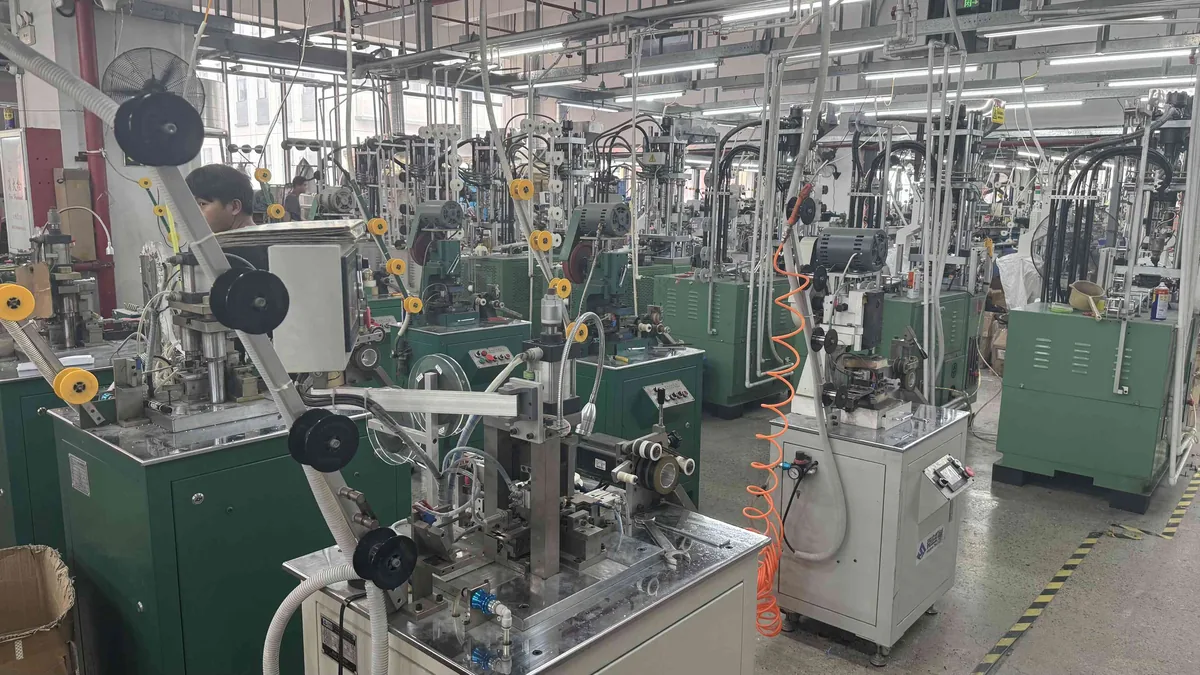
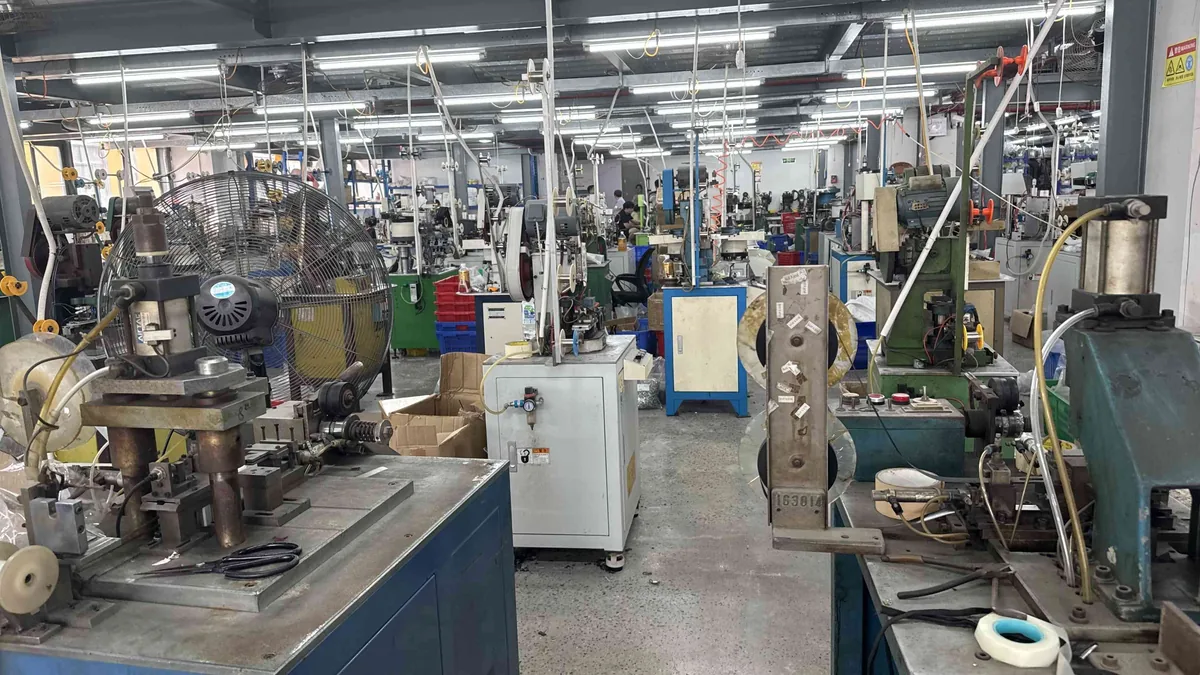
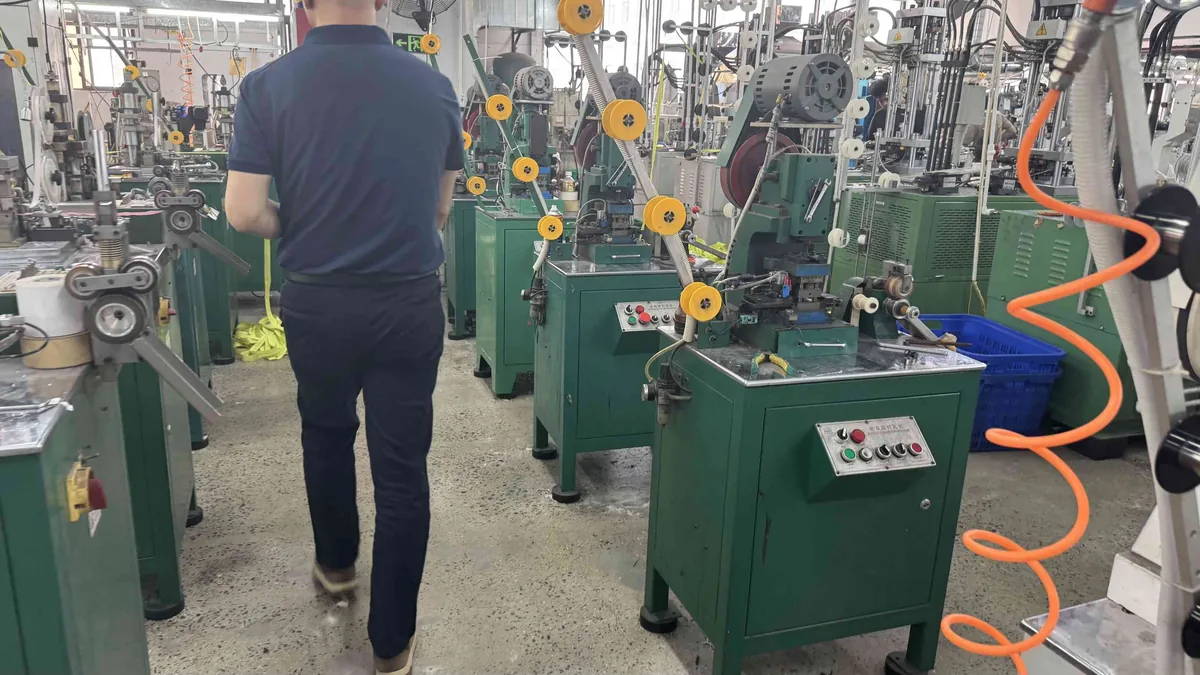
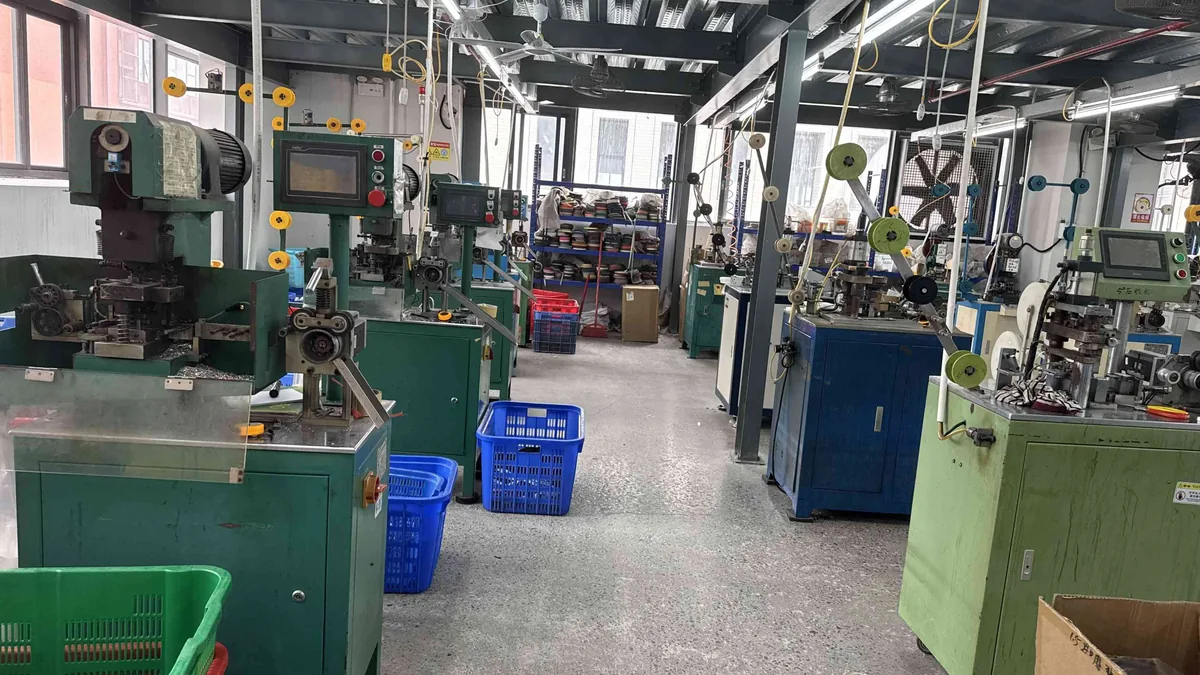
These companies own their production: injection molding, coil forming, assembly lines, metal stamping and plating, and — critically — an in-house QC lab. They can show you the factory, walk you through each station, and produce test reports because they run the tests themselves.
Tier 2: Workshops and assemblers
Smaller operations that may assemble zippers from bought-in components (tape, sliders, coil) without owning the upstream processes. Quality can be acceptable but is harder to guarantee, and customization is limited to what their suppliers offer.
Tier 3: Trading companies
Intermediaries with no production at all. They buy from tiers 1 and 2 and resell with a markup. Some are honest brokers; many present themselves as “factories” using borrowed photos. The danger is not just the markup — it is that you have no direct line to the people who control quality.
| Tier 1: Manufacturer | Tier 2: Workshop | Tier 3: Trader | |
|---|---|---|---|
| Owns production | Yes (full) | Partial | No |
| In-house QC lab | Yes | Rare | No |
| Custom tooling | Yes | Limited | No |
| Price | Best (direct) | Medium | Highest (markup) |
| Can show real factory | Yes | Sometimes | No |
Your goal is almost always to reach a Tier 1 manufacturer directly. Everything below is about verifying that you have.
Want to skip the guesswork? Request a quote and ask us for a live video walk-through of the production floor.
How to verify a real factory (a practical checklist)
Photos lie. Audits do not. Here is how to confirm you are dealing with a real manufacturer before you place an order.
1. Ask for the legal entity
A real factory has a registered business name and a manufacturing license. Cross-check the legal name against the trademark and the website. If the “factory” cannot produce a consistent legal name, walk away.
2. Request a live video tour
This single step eliminates most trading companies. Ask for an unscripted, real-time video walk from the reception sign, through injection molding and assembly, to the QC lab. A genuine manufacturer can do this on short notice.
3. Look for in-house QC equipment
The presence of a tensile tester, a salt-spray chamber and an inspection conveyor is one of the clearest signals of a Tier 1 operation. These machines are expensive and pointless for a trader to own. See how we use ours on our quality page.
4. Order a pre-production sample and test it
Independent verification beats any claim. Pull-test the sample yourself or via a third party. The industry threshold for lateral pull strength is ≥ 3 kg; a serious supplier will meet or beat it on every batch.
5. Check for third-party audits
ISO 9001 covers quality management systems; OEKO-TEX® covers textile safety. A factory that holds or is pursuing these has invested in process discipline.
What good terms look like
Once you have found a real factory, the commercial terms tell you how serious they are about your business.
- MOQ: Reasonable manufacturers offer per-colour minimums in the low thousands for standard products, with higher minimums only for custom tooling.
- Sampling: 7–14 days for custom samples is normal. Free or low-cost sampling signals a supplier that wants the relationship.
- Lead time: 15–30 days for standard production; 30–45 days for fully custom runs.
- Payment: Staged terms (deposit + balance) are standard. Be cautious of anyone demanding 100% upfront on a first order.
Matching the zipper to the product
A good manufacturer will steer you to the right type rather than selling you the most expensive option:
- Nylon coil for everyday apparel — light, flexible, self-healing.
- Metal for denim, leather and premium bags — strength and a luxury feel.
- Resin for outdoor and cold-weather gear — vivid colour, stays flexible.
- Waterproof for rainwear and technical gear — IPX5 TPU construction.
- Reflective for safety and workwear — EN ISO 20471-compatible visibility.
The bottom line
A YKK alternative is not a compromise if you do the verification work. Reach a Tier 1 manufacturer directly, confirm the factory is real, test the samples, and lock in sensible terms. Do that, and you capture the 40–60% saving without inheriting the risk.
Ready to compare? Send us your specs for a free quote and a sample you can test against your current supplier.
Frequently asked questions
Are Chinese zippers as good as YKK? The best Tier 1 manufacturers produce zippers that meet the same functional thresholds (pull strength, cycle life, corrosion resistance) at a significantly lower price. The variance is wider than with YKK, which is exactly why factory verification matters.
How do I know if a supplier is a real factory or a trading company? Ask for a live video tour, the registered legal name, and evidence of in-house QC equipment (tensile tester, salt-spray chamber). Traders cannot produce all three.
What is the minimum order quantity for custom zippers? For standard products, expect per-colour MOQs in the low thousands. Fully custom tooling (bespoke pulls or moulds) typically starts around 5,000 pieces.
How long does sampling take? Custom samples usually take 7–14 days, followed by 30–45 days for full custom production once the sample is approved.
What pull strength should a quality zipper have? The industry threshold for lateral pull strength is ≥ 3 kg. A serious manufacturer tests every batch against this standard.